 Bambu Proje-Danışmanlık
What happens if a field is not cultivated for 2 years? Leasing of uncultivated agricultural land (2026)
Short answer: If your field lies empty for two consecutive years, your title deed (tapu) will not be taken away from you. However, under the paragraphs added in 2023 to Article 8/K of Law No. 5403 (5403 sayılı Kanun), the Ministry of Agriculture and Forestry may identify the land and lease it to someone else for one season. The rent is paid to the landowners (the registered owners); if the owner cannot be reached, it accumulates in a special account dedicated to the land. The agricultural subsidies for that season go to the tenant. The lists are publicly announced for five days locally (in practice at the office of the village or neighbourhood headman, the muhtarlık) and on the website of the Provincial Directorate of Agriculture and Forestry (İl Tarım ve Orman Müdürlüğü); in 2026 the announcements began on 1 September. Objections must be made within this period.
Last updated: 24 November 2026
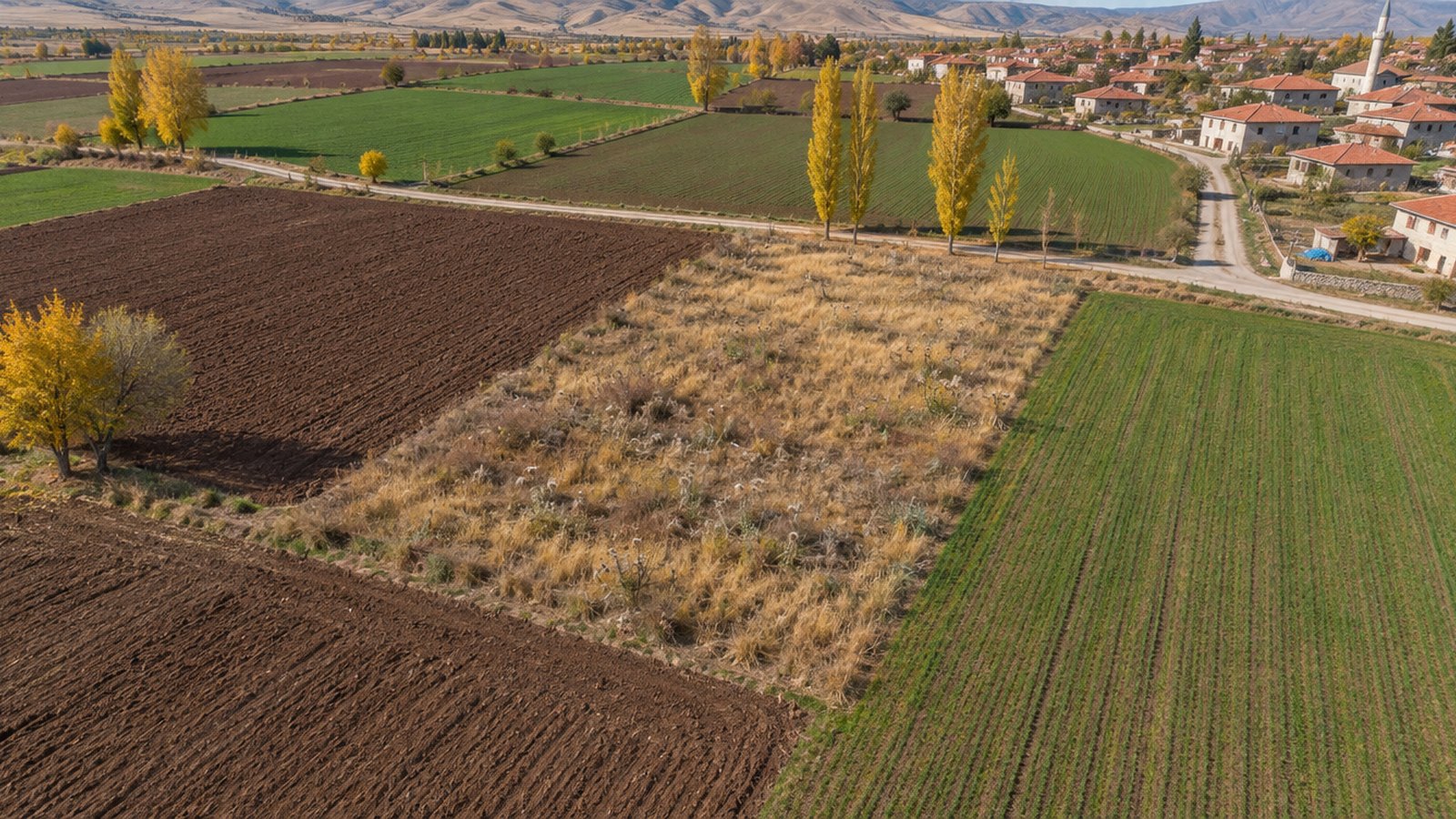
Migration from villages to cities, heirs who cannot agree, shared title deeds (hisseli tapu, a title deed held jointly by several co-owners) or simply a lack of time… Many fields in Türkiye lie empty for years. Since 2023 this has had a consequence: land on which no agricultural production has taken place for two consecutive years can be leased out for one season without the owner's consent. In this article we explain what the rule says, how the process works, how to object and what you can do to keep your field off the list.
What is the rule? Article 8/K of Law No. 5403
Article 8/K was added to the Soil Conservation and Land Use Law No. 5403 (5403 sayılı Toprak Koruma ve Arazi Kullanımı Kanunu) in 2014; the paragraphs on leasing uncultivated land were added by Law No. 7442 on 23 March 2023 (in force from 5 April 2023). Under these provisions, the Ministry identifies agricultural land that has not been cultivated for two consecutive years because of shared ownership, ownership disputes, fragmentation, the cessation of farming, migration or any other reason, and leases it out on a seasonal basis, on condition that the rental income belongs to the owner and that the land's character (its designation in the title deed, i.e. its type of use such as field or vineyard) is not changed.
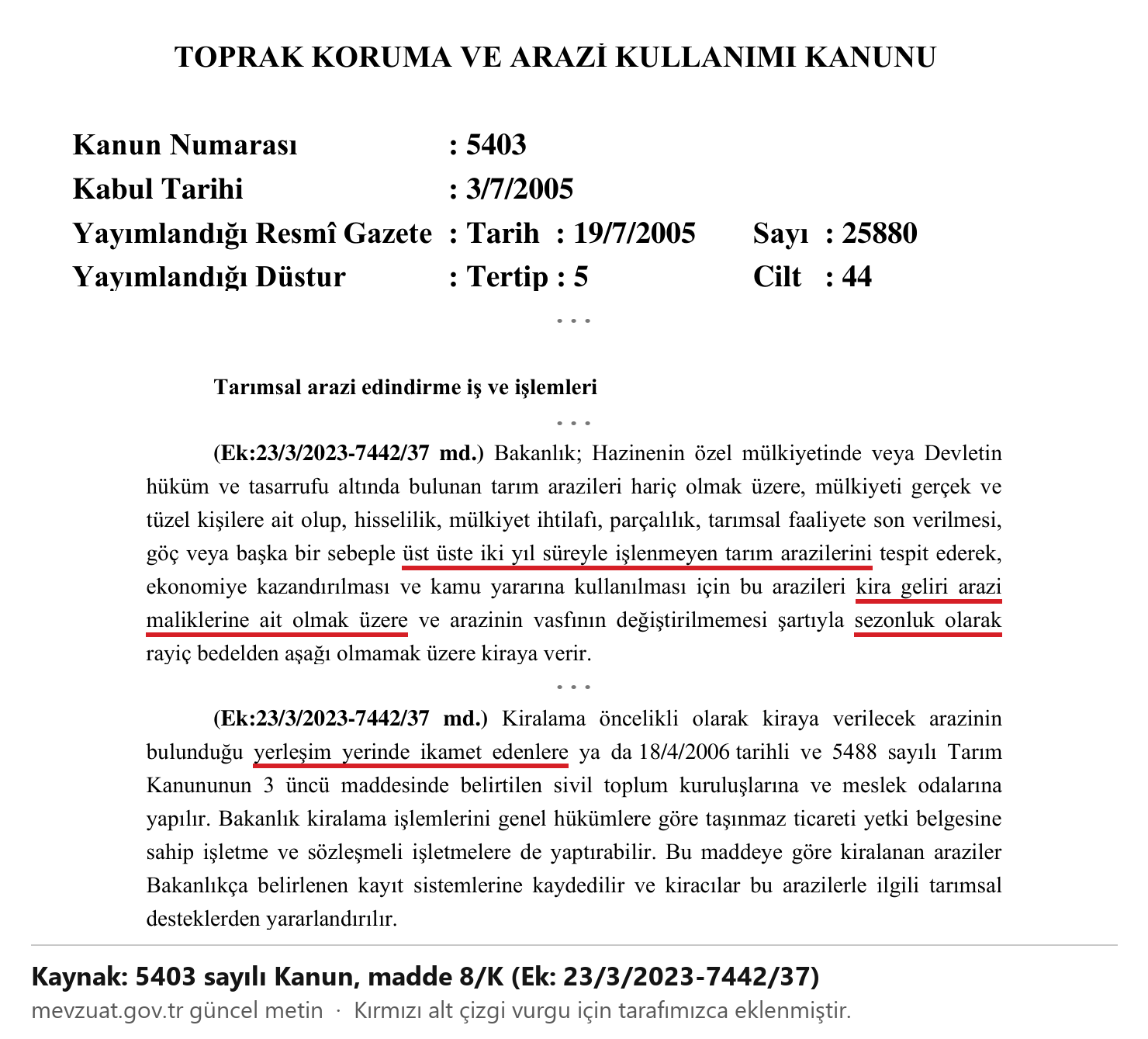
… shall identify agricultural land that has not been cultivated for two consecutive years and, in order to bring it back into the economy and use it in the public interest, lease such land on a seasonal basis at not less than the market value, on condition that the rental income belongs to the landowners and that the character of the land is not changed.
The details of implementation were set out in the Regulation on the Leasing of Uncultivated Agricultural Land for Agricultural Purposes, published in the Official Gazette (Resmî Gazete) of 22 August 2024. Land in the private ownership of the Treasury and land under the jurisdiction and control of the State (for example pasture) falls outside this rule; the rule applies to agricultural land belonging to natural and legal persons.
What does “two years” mean? Does mowing grass or grazing livestock count?
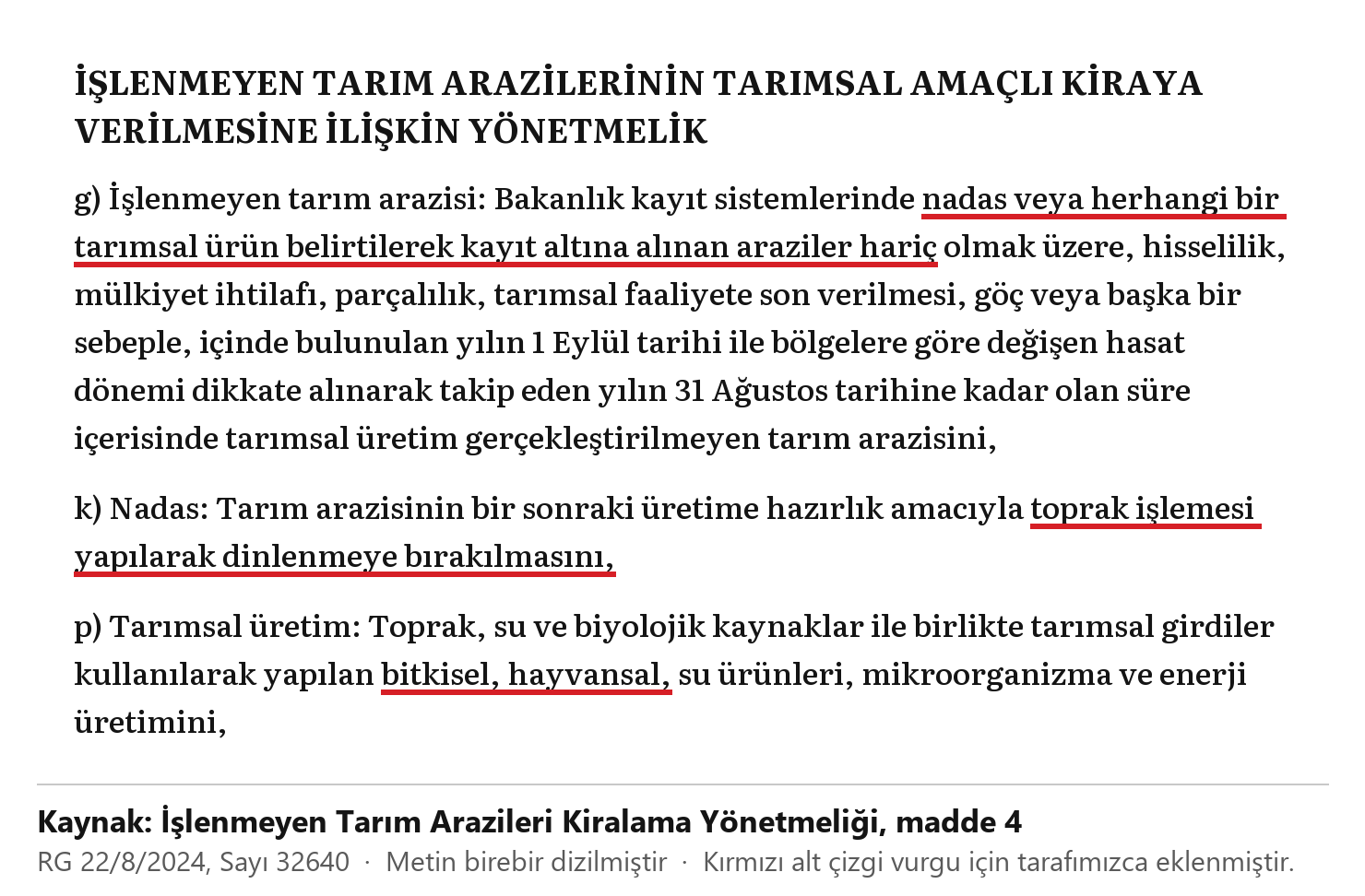
The Regulation counts years not as calendar years but as production years: from 1 September to 31 August of the following year, also taking into account the harvest period in the region. The criterion is not “sowing” but “agricultural production”. The Regulation defines agricultural production broadly, including both crop and livestock production. However, there is no provision stating explicitly whether merely mowing grass or grazing animals on a field counts as production during the assessment. The safest course, therefore, is to have the production you carry out entered in the Ministry's records (the Farmer Registration System, Çiftçi Kayıt Sistemi – ÇKS). Fallow means ploughing the soil and leaving it to rest in preparation for the next crop; details below.
Who identifies empty fields, and how?
The Land Assessment Commission, set up within the provincial or district directorate of agriculture and forestry, identifies uncultivated land using cadastral parcel data, satellite imagery, geographic information systems, data from other institutions and on-site inspections. The results are cross-checked against the Ministry's registration systems. Land for which there is a declaration of fallow or of any agricultural crop in the Ministry's records is not considered “uncultivated land” (Regulation Art. 4/g, Art. 7/1-3).
If only part of a parcel is empty, that part may also be assessed separately as uncultivated land (Art. 7/5). Small or unproductive plots that are not economic for agricultural production may be excluded from that year's leasing by means of an official report (Art. 7/4).
Where are the lists announced? Nobody will knock on your door
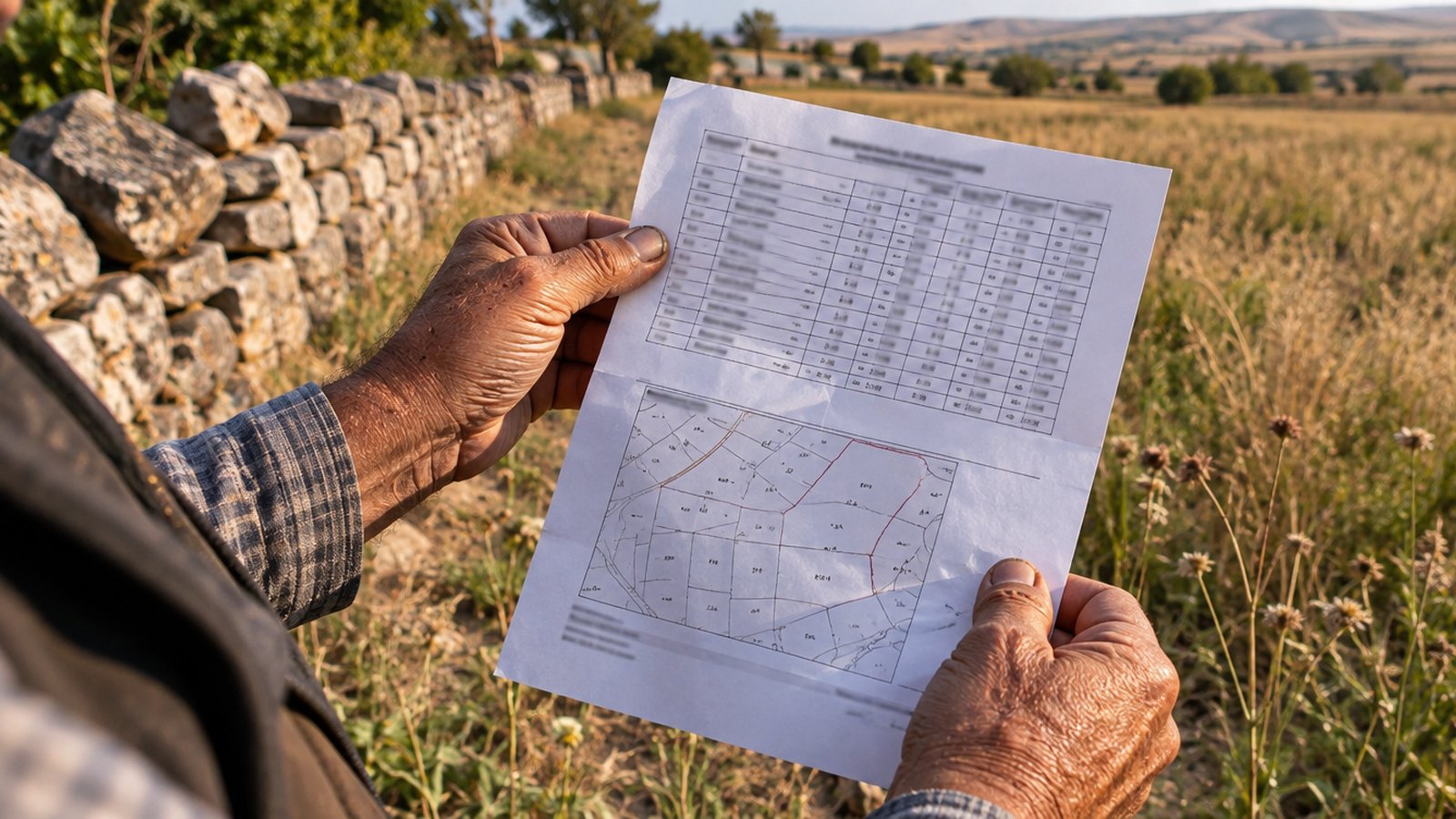
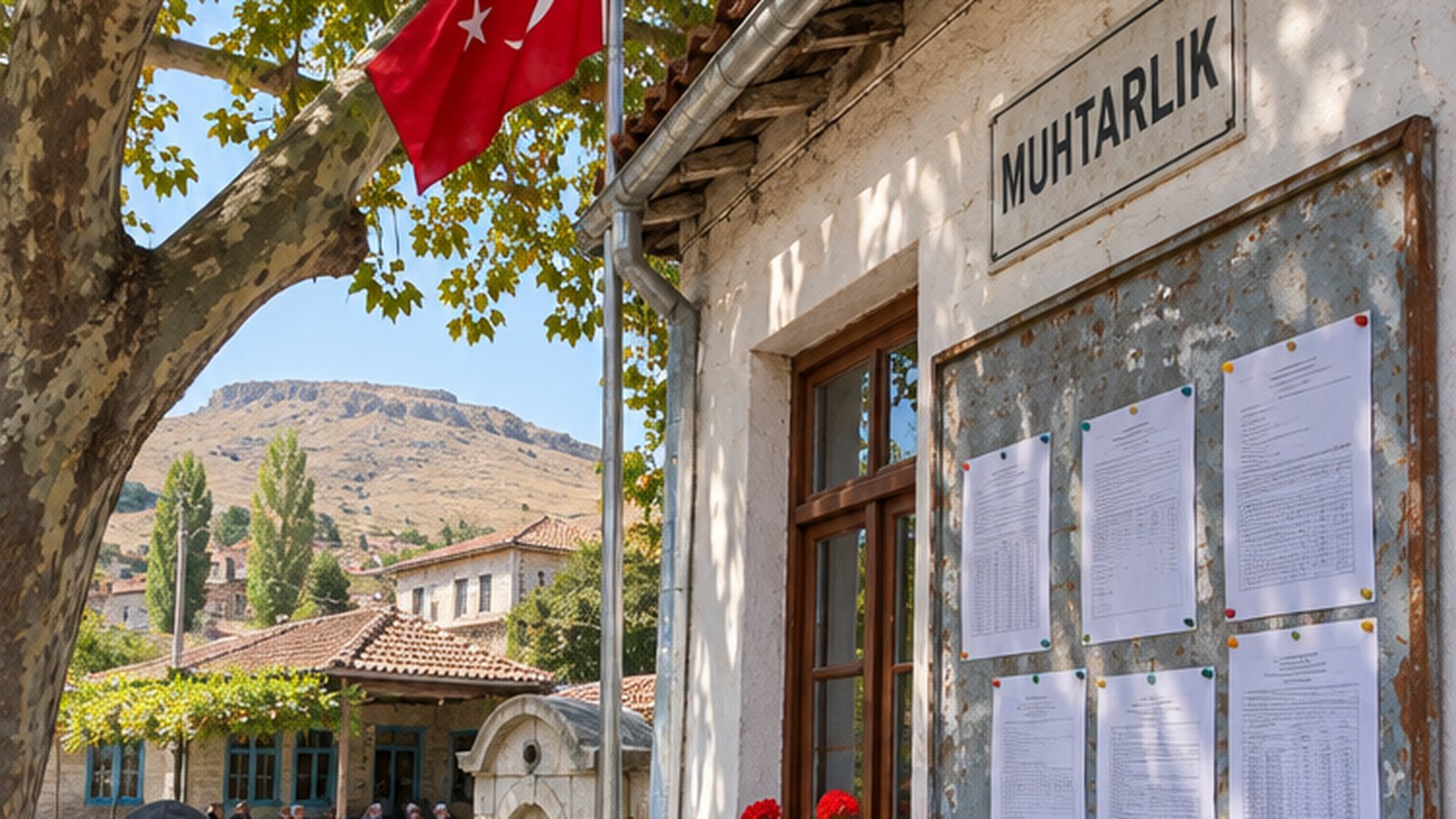
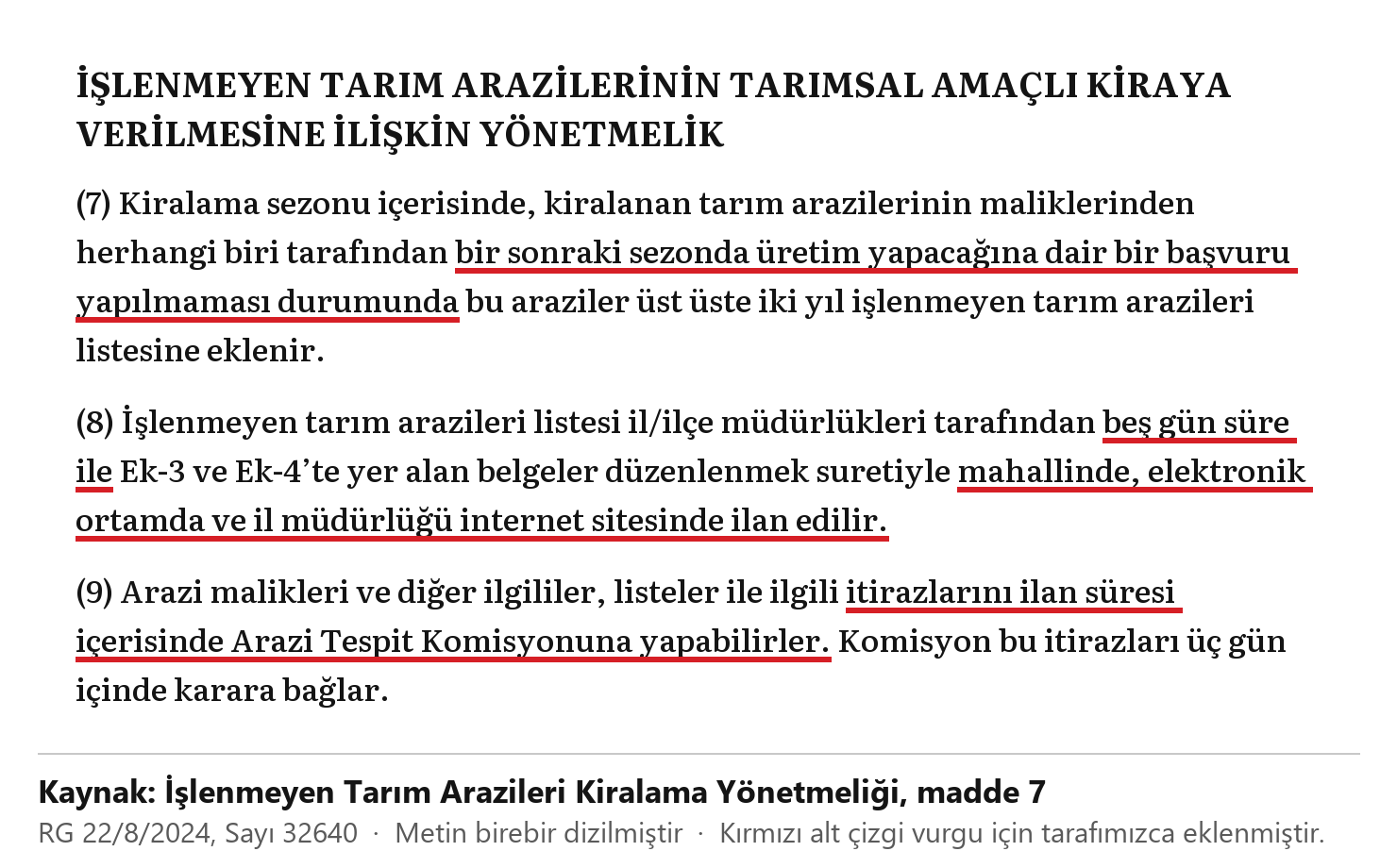
After the assessment, two lists are drawn up: land uncultivated for the first year, and land uncultivated for two consecutive years (Art. 7/6). The provincial/district directorate announces the lists for five days locally (in practice on the headman's notice board), electronically and on the provincial directorate's website (Art. 7/8). The Regulation does not fix the date of the announcement; in 2026 the announcements began on 1 September (example: announcement by the Eskişehir Provincial Directorate). The Regulation contains no provision for separate personal notification of the landowner; some provincial announcements (for example Amasya) published the lists “by public notice to those concerned”. So if you live in a city, you need to keep an eye on the headman's office and the provincial directorate's announcements page in September.
The key warning: Even when your field lies empty for the first year, it is announced on the “uncultivated for the first year” list. Leasing comes into play in the second year; the best time to act is the moment you see the first list.
How do you object?
First list (5 days): Landowners and other interested parties submit their objections to the Land Assessment Commission within the announcement period. In the 2026 provincial announcements, objections had to be made in writing to the district (in some provinces the provincial) directorate of agriculture and forestry where the property is located. The Commission decides on the objection within three days; the final list becomes definitive once approved by the local administrative chief (the governor or district governor, or a person they authorise) (Art. 7/9).
List of land to be leased (7 days): The market rent (the current market rent determined by reference to comparable rents in the locality) of the land on the final list is set, and the “List of Agricultural Land to Be Leased” is announced for seven days. You may also object to this list, to the Land Leasing Commission, within the announcement period; the objection is submitted in writing to the provincial or district directorate, and the Commission decides within three days (Art. 9/4, Art. 9/7).
If your objection is rejected: Consult a lawyer about the next step without delay.
Parcels for which a court has issued an interim injunction (a temporary prohibition imposed by the court while the case is pending) preventing use of the land are not leased out (Art. 9/5). For example, if in a partition action (a lawsuit by co-owners to divide or sell jointly owned property) the court has imposed an injunction preventing use of the field, that parcel will not be leased out. The mere filing of a lawsuit, or a restriction on sale alone, does not have this effect.
Who has priority in leasing?
Land is leased first to residents of the village, small town (belde) or neighbourhood where it is located, to cooperatives, unions, associations and foundations active in agriculture, and to chambers of agriculture. If there is more than one applicant from this priority group, the highest bidder wins; if there is no applicant from the priority group, the highest bid among the other applicants wins (Law Art. 8/K; Regulation Art. 9/8-9). If bids are equal, the order set out in paragraph 10 of Article 9 of the Regulation applies: first the owner for whom this land would bring their own land up to the minimum economic size for the district, then an adjoining holding (bordering the field), then the holding with the nearest land. A natural person who is to become a tenant must be a citizen of the Republic of Türkiye (Art. 9/6).
How do you lease uncultivated agricultural land?
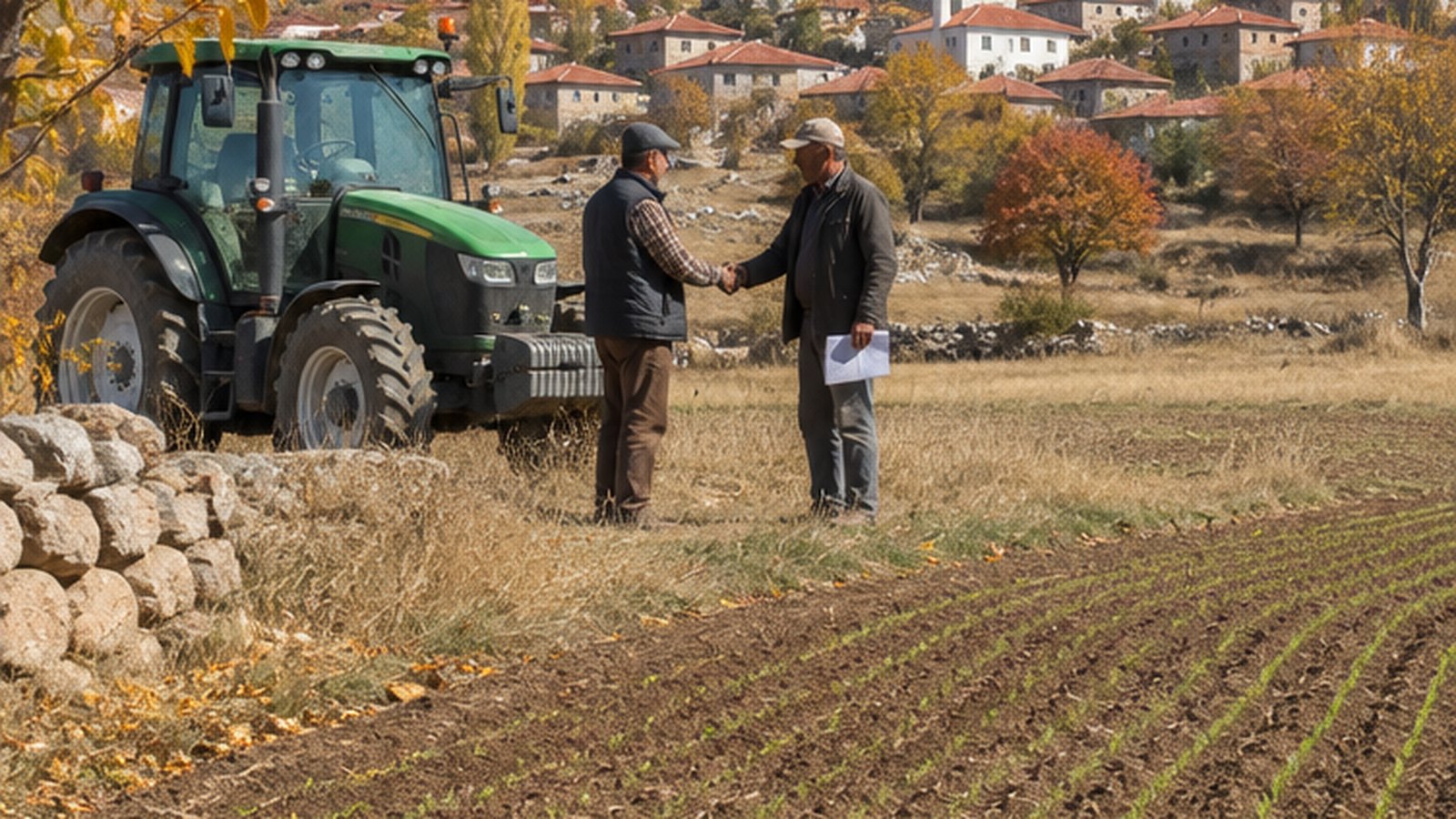
Those wishing to lease fill in the Agricultural Land Lease Request Form in Annex 12 within the seven-day announcement period of the List of Agricultural Land to Be Leased and submit it to the provincial or district directorate of agriculture and forestry; applications can also be made via the TED Portal (Art. 9/6). Some provinces' announcements also state the land's market rent and the crop group that may be grown. The tenant pays the rent and contract costs within seven days of being notified (Art. 9/11). For the tenant to be able to register this land in the Farmer Registration System in their own name, the ÇKS Regulation requires the lease contract to be signed in the presence of the headman and a member of the village council and approved by the headman (ÇKS Regulation Art. 7/9).
How is the rent paid to you, and when does the field come back?
The rent cannot be lower than the market rent assessed by the Land Leasing Commission (Art. 9/4). The market rent is determined by reference to comparable rents in the locality (Art. 10).
The tenant pays the rent within seven days at the latest after notification (Art. 9/11). Payment is made to your bank account or to an account dedicated to the land (Art. 4/ç). The Regulation does not say how account details (IBAN) are to be provided; ask the provincial or district directorate.
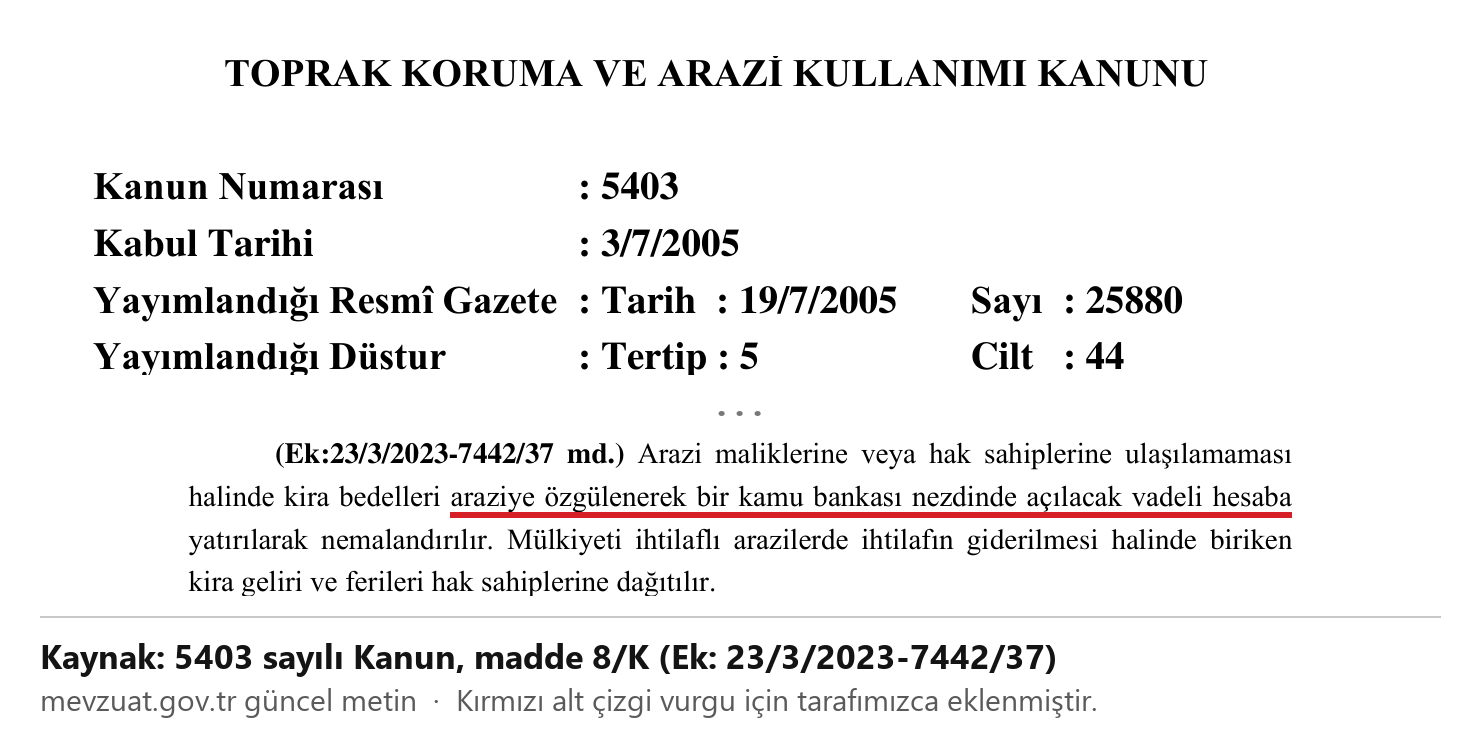
If you or other entitled persons cannot be reached, the rent accumulates in a three-month term deposit account dedicated to the land at a state-owned bank. For land whose ownership is disputed, once the dispute is resolved the accumulated rent is distributed to the entitled persons in proportion to their shares (Law Art. 8/K; Regulation Art. 9/16).
The lease term is one season: the lease starts on the day the contract is signed and ends, depending on the harvest period, on 31 August at the latest (Art. 4/ı; Annex 15 lease contract Art. 1). The land is handed over to the tenant with a handover report including a sketch map; the tenant is obliged not to damage the soil structure and to protect perennial plants and any fixed installations (Art. 9/14, Art. 9/19).
In the lease contract (Annex 15) the lessor is the Provincial Director; the landowner is not a party to the contract. The tenant may not sublet the land, take on partners or erect permanent structures on it, and must vacate the land when the contract ends. If the tenant breaches the contract and fails to remedy the breach within the period given, the contract is terminated and eviction is carried out (Art. 9/20).
You cannot use the field during that season. The leased land is entered in the registration systems in the tenant's name, and the tenant benefits from that season's agricultural subsidies (Law Art. 8/K; Regulation Art. 9/15). One exception: if the field is sold or the owner dies, and the new owner, who will farm the land themselves, notifies the tenant within one month of acquiring it, the contract automatically ends at the end of the following harvest (Annex 15 Art. 14/c).
Getting your leased field back
Paragraph 7 of Article 7 of the Regulation states: if, during the leasing season, none of the owners of the leased land applies to declare that they will carry out production in the next season, the land is added again to the “uncultivated for two consecutive years” list. In other words, if you are going to sow your field yourself next season, you need to submit an application stating this during the leasing season; for a shared field, it is enough for one of the co-owners to apply. The Regulation does not say where, on which form or by when this application is to be made: apply in writing to the district directorate of agriculture and forestry where the land is located and keep a copy. After applying, it is important that you actually carry out production and have it recorded; otherwise the land may be put back on the list at the next assessment.
Fallow and the Farmer Registration System: the right way and the wrong way
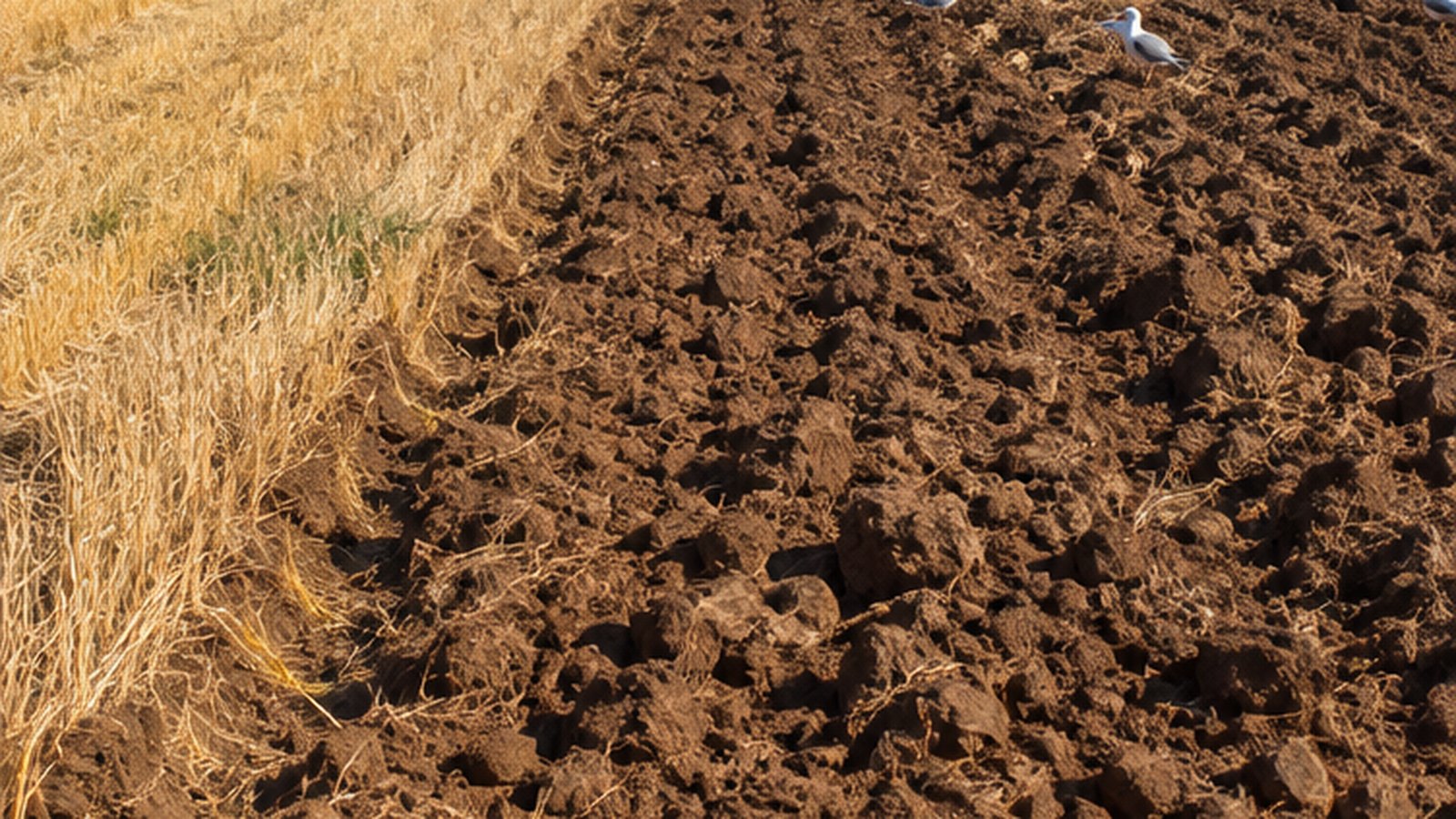
The Regulation defines fallow as “leaving agricultural land to rest after tilling the soil in preparation for the next production” (Art. 4/k). Land with a fallow or crop declaration in the Ministry's records is not considered uncultivated (Art. 4/g). So if you want to rest the field, you must first plough the soil and then have it registered as fallow in the Farmer Registration System (ÇKS).
Caution: Registering an unploughed, overgrown field in the ÇKS as fallow is a false declaration. Under the subsidy communiqué, in such cases any subsidy paid is reclaimed, a producer found to have benefited unlawfully is barred from all subsidies for five years, and a criminal complaint is filed with the Chief Public Prosecutor's Office; these decisions are taken by the provincial/district arbitration commission (the board that handles subsidy disputes) (Communiqué No. 2024/39 Art. 14/3-a). Because assessments also involve on-site inspections, an unploughed field will be spotted.
One more warning: under the same communiqué, crop production subsidies are not paid for land left fallow in two or more consecutive production years, or for empty land on which no tillage at all has been carried out during the production year (Communiqué No. 2024/39 Art. 17/2-b). Fallow protects the field from the list, but repeated fallow costs you subsidies.
Only a “farmer” can register in the ÇKS: a person who has carried out agricultural production for at least one production period as owner, tenant, sharecropper or partner (ÇKS Regulation Art. 4/ç). For first registration, a Farmer Certificate (Çiftçi Belgesi) issued by the chamber of agriculture is required. For a landowner who does not farm and lives in a city, getting fallow registered in the ÇKS may be difficult. In that case the most practical solution is to lease your field to a farmer yourself: if your tenant sows the field and registers the production in their own name, the land counts as cultivated. If the field is jointly owned, leasing it requires a decision by a majority of the co-owners both by shares and by number (Turkish Civil Code Art. 691).
Which land is not leased out?
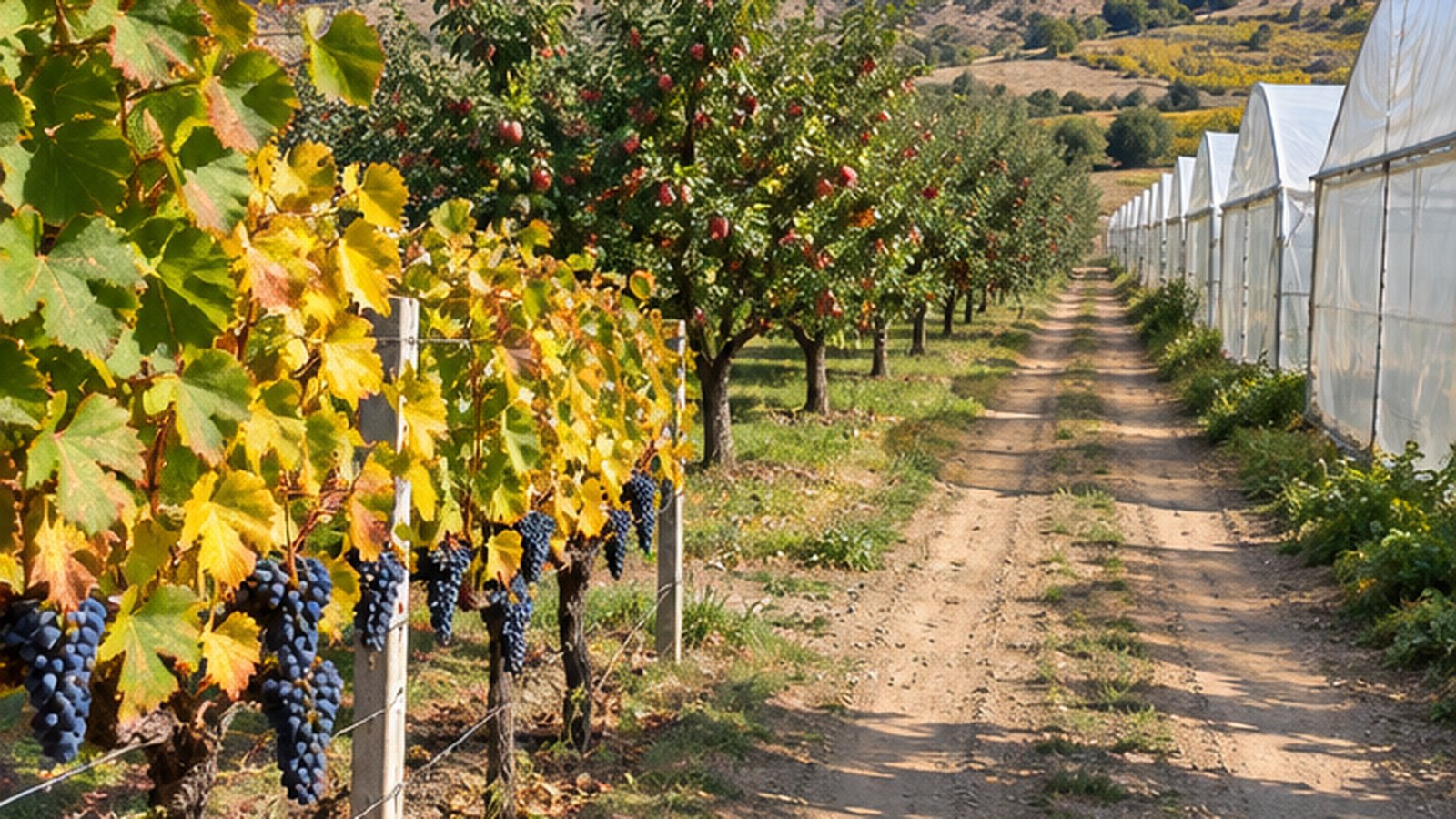
Planted agricultural land (land planted with perennials, such as vineyards, orchards and olive groves) and land under cover such as greenhouses and polytunnels (Art. 7/4). Ask the provincial directorate whether your land falls into this category.
Land with a fallow or crop declaration in the Ministry's records (Art. 4/g).
Parcels for which a court has issued an interim injunction preventing their use (Art. 9/5).
Land in the private ownership of the Treasury and land under the jurisdiction and control of the State (Law Art. 8/K).
Land that the Commission does not consider economic, for that year (Art. 7/4).
Land on which unauthorised buildings or installations preventing agricultural production are found is assessed separately under the provisions of Law No. 5403 on unauthorised use (Art. 7/4).
Shared or inherited fields
The Law explicitly lists shared ownership and ownership disputes among the reasons land lies empty. In co-ownership by shares, each co-owner is entitled to carry out agricultural work (Turkish Civil Code Art. 690); one co-owner sowing the field is enough for the land to count as cultivated. For ÇKS registration of jointly owned land, a lease contract is required; failing that, a letter of consent (written permission) from the other co-owners; and if that cannot be obtained, a letter of undertaking. ÇKS records for jointly owned land are publicly posted for 15 days, during which objections may be made (ÇKS Regulation Art. 7). If an inheritance has not been divided (joint ownership, elbirliği mülkiyeti), the heirs must act together. If the heirs cannot be reached, the rent accumulates in the account dedicated to the land and is distributed according to shares once the dispute is resolved.
Tax on rental income
Income from leasing land is income from immovable property (rental income from real estate) under Article 70 of the Income Tax Law. We found no exemption specific to this leasing arranged through the Ministry; your rental income may be subject to an annual tax return. Whether the tenant withholds tax depends on the tenant's status. Consult your accountant or tax office about the amount and the return.
What has happened in practice?
According to the Ministry of Agriculture and Forestry's 2025 Annual Administrative Activity Report, 138 hectares (1,380 dönüm; 1 dönüm = 1,000 m²) of uncultivated agricultural land were leased out in 14 provinces in 2025. More striking is this: 56% of the 29,480 hectares (294,800 dönüm) of land that could have been leased, i.e. 17,209 hectares (172,090 dönüm), was brought back into agricultural production by its owners. In the report's words, it was observed that landowners tended to farm their land rather than have it leased. The Ministry announced that it had started the announcement process for the 2026 production year on 1 September 2026 (Ministry announcement, 15 September 2026).
Common mistakes
Believing that “the title deed will be cancelled and the state will seize the land”: ownership does not change and the rent is paid to you; notarisation and registration of the lease contract are not even mandatory (Art. 9/11).
Ignoring the first-year list: that is the real warning.
Waiting to be told: announcements are made at the headman's office and online; no personal notification is provided for.
Registering an unploughed field as fallow: it is a false declaration and can also cost you your subsidies.
Forgetting to submit the “I will sow it myself next season” application for a leased field: the land goes back on the list.
Not knowing about the second right of objection, to the leasing list (7 days).
Frequently asked questions
If my field is not sown for 2 years, will the state seize it?
No. Ownership remains with you. The Ministry can lease the land out for one season only, and the rent is paid to you.
Does an unsown field pass to the state or the Treasury?
No. The Law and the Regulation create only a lease relationship; there is no transfer, registration or expropriation in the land registry. The rental income belongs to the landowners (Law Art. 8/K; Regulation Art. 9/1).
What happens if my field is not sown for 1 year?
It is not leased out, but it may be included on the “land uncultivated for the first year” list and announced (Art. 7/6). This is a warning: if there is no production the following season either, the land becomes a candidate for leasing.
How do you lease uncultivated agricultural land?
During the seven-day announcement of the List of Agricultural Land to Be Leased, you apply with the Annex 12 Lease Request Form to the provincial or district directorate of agriculture and forestry, or via the TED Portal. Priority is given to village residents, cooperatives and the chamber of agriculture; the highest bid among them wins (Art. 9/6-9).
How will I find out that my field is on the list?
The lists are announced for five days locally (in practice at the headman's office), electronically and on the website of the Provincial Directorate of Agriculture and Forestry; in 2026 the announcements began on 1 September. Do not wait for personal notification; follow the announcements in September.
I missed the objection deadline. What can I do?
The list of land to be leased is announced separately for seven days. You can also object to this list in writing within the deadline; the Commission decides within three days. If the field has been leased, submit, during the leasing season, the application stating that you will produce yourself next season.
How much will the rent be?
It cannot be lower than the market rent set by the Commission on the basis of comparable rents in the village. If there is more than one applicant, it may also be higher, since the highest bid wins.
Will my olive grove, vineyard or greenhouse be leased out?
The Regulation excludes planted agricultural land and land under cover, such as greenhouses, from leasing (Art. 7/4). Ask the provincial directorate whether your land falls into this category.
Is it enough if one co-owner sows a shared field?
If one of the co-owners actually carries out production on the field and has it recorded, the land counts as cultivated. The written permission of the other co-owners may be required for ÇKS registration. If only part of the field is sown, the empty part may be assessed separately (Art. 7/5).
I want to rest my field. What should I do?
Plough the soil and let it rest, and have it registered as fallow in the Farmer Registration System. Registering an unploughed field as fallow is a false declaration.
What happens if the tenant damages my field?
The tenant is obliged not to damage the soil structure and to protect perennial plants and fixed installations. If a breach is found, the tenant is given a deadline; if it is not remedied, the contract is terminated and eviction is carried out. As the lessor in the contract is the Provincial Director, report the matter to the provincial directorate. The tenant may not bid for these leases the following year; the landowner's rights are reserved (Art. 9/18-20).
Sources
Soil Conservation and Land Use Law No. 5403, current text, Article 8/K (added: 30/4/2014-6537/5; uncultivated land paragraphs added: 23/3/2023-7442/37).
Regulation on the Leasing of Uncultivated Agricultural Land for Agricultural Purposes, Official Gazette 22/8/2024, Issue 32640 (Articles 4, 5, 7, 9, 10) and its annexes (Annex 12 request form, Annex 15 lease contract).
Announcement by the Eskişehir Provincial Directorate of Agriculture and Forestry (1/9/2026): an example of provincial practice.
Ministry of Agriculture and Forestry 2025 Annual Administrative Activity Report (section on uncultivated agricultural land).
Farmer Registration System Regulation, Official Gazette 27/5/2014 (Articles 4/ç and 7; with the 2022 and 2025 amendments).
Communiqué on Payments for Crop Production Subsidies and Certain Other Agricultural Subsidies to Be Made in 2025-2027 (Communiqué No: 2024/39), Official Gazette 31/12/2024 (Article 3 definition of fallow, Article 14 false declaration, Article 17 land for which no payment is made).
Turkish Civil Code, Articles 690 and 691.
Income Tax Law, Article 70.
This article is for general information only. For the specific situation of your land, consult the provincial/district directorate of agriculture and forestry, an agricultural engineer or a lawyer.