 Bambu Proje-Danışmanlık
How to Get a Water Well Permit and Well Licence (2026)
Last updated: 24 November 2026. The information is based on the current text of Groundwater Law No. 167 (Yeraltı Suları Hakkında Kanun) and the Groundwater Bylaw (Yeraltı Suları Tüzüğü), Law No. 5403 and the Agricultural Land Regulation (Tarım Arazileri Yönetmeliği) of 4 April 2026; sources are listed at the end of the article.
Short answer: To sink an irrigation well on agricultural land you need two separate permits: an exploration certificate from the State Hydraulic Works (DSİ) for the groundwater (popularly called a ‘drilling permit’), and a Law No. 5403 permit via the Provincial Directorate of Agriculture and Forestry (İl Tarım ve Orman Müdürlüğü) for the structure on agricultural land. Everything starts with DSİ; if DSİ’s response is negative, the process goes no further. Once you hold both documents, an authorised driller sinks the well. When water is found, you apply to DSİ within one month for a usage certificate, i.e. the well licence; this certificate is not issued until a meter is fitted, and without it the well cannot be connected to electricity.
Why do you need two permits to sink a water well on a field?
Because a well falls under two separate laws. The first concerns the water itself: under Article 1 of Law No. 167, groundwater is under the authority and disposal of the State, regardless of who holds the title deed (tapu). A DSİ certificate is mandatory for a well drilled by borehole (Article 8).
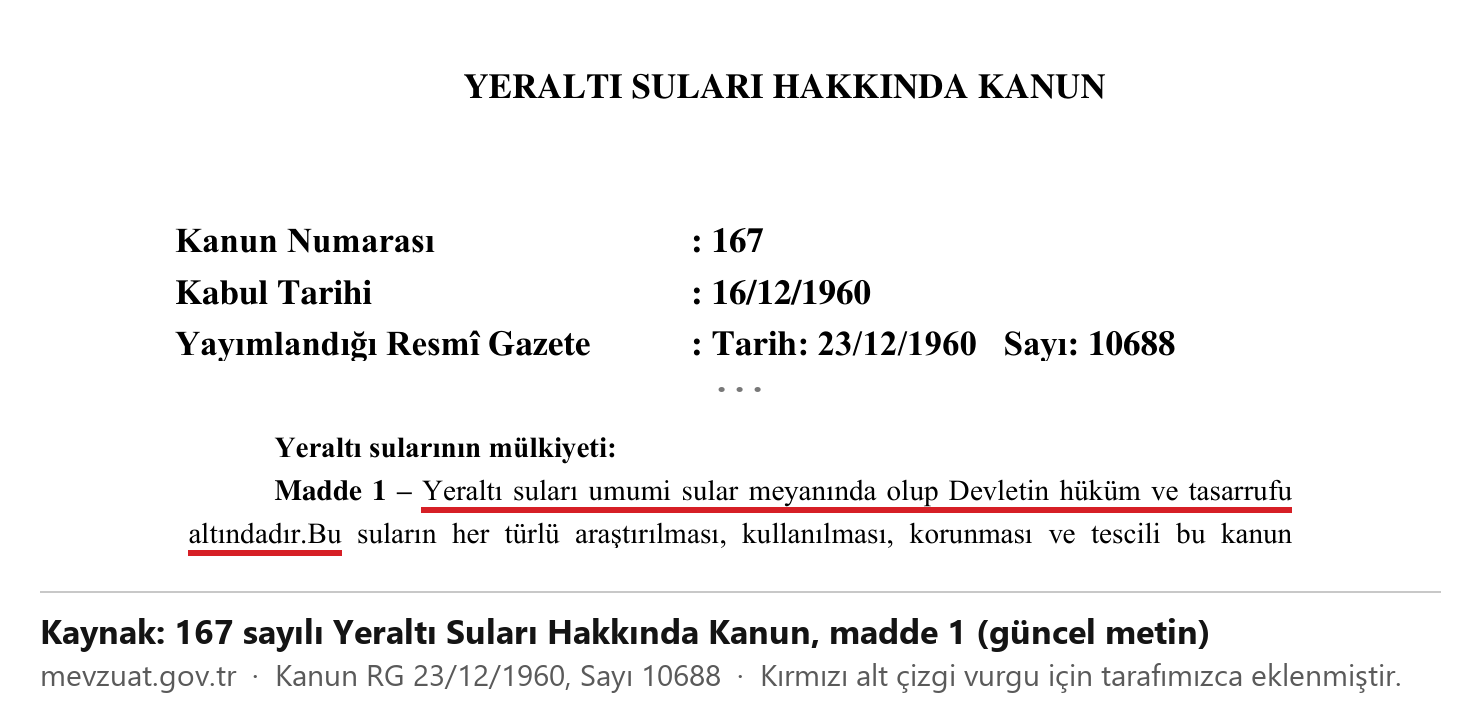
Groundwater is among the public waters and is under the authority and disposal of the State. (Law No. 167, Article 1)
The second concerns the land itself: the Soil Conservation and Land Use Law No. 5403 (5403 sayılı Toprak Koruma ve Arazi Kullanımı Kanunu) counts irrigation infrastructure as an agricultural building (tarımsal amaçlı yapı) (Article 3) and makes every structure on agricultural land subject to a permit. The 2026 Agricultural Land Regulation also explicitly classes water wells and pumping facilities as agricultural buildings (Annex 1, item 2.2). For this reason, a well on agricultural land requires review by the Provincial Directorate of Agriculture and Forestry and a permit from the Governor’s Office (Valilik).
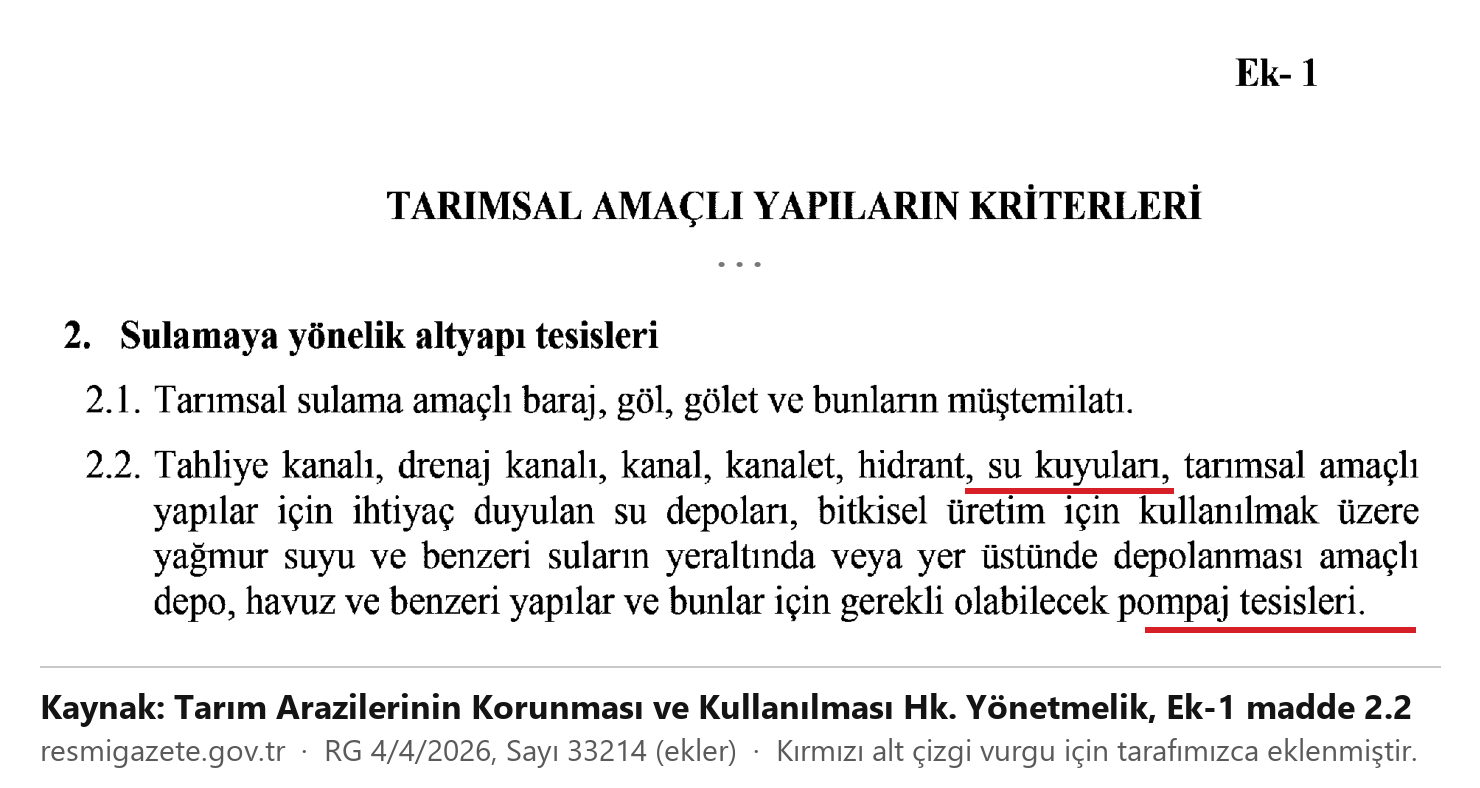
2.2. Discharge channels, drainage channels, canals, flumes, hydrants, water wells, water tanks needed for agricultural buildings, … and any pumping facilities that may be required for these. (Regulation, Annex 1)
How do you get a water well permit? Step-by-step process
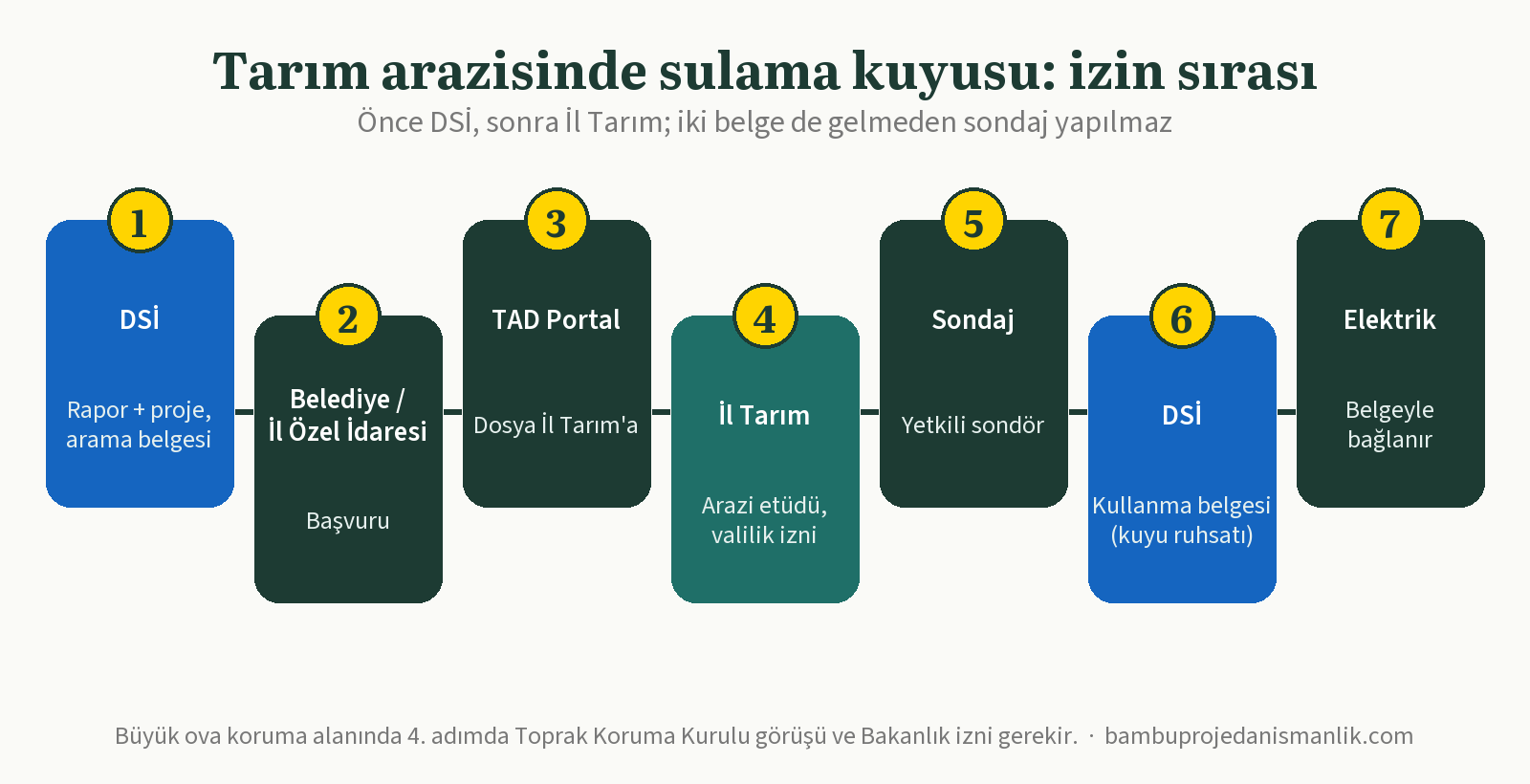
Report and project: An authorised geologist, hydrogeologist or engineer (technical supervisor, fenni mesul) prepares the well project with a sketch map; the well is sunk under their responsibility (Bylaw Article 7). For sites DSİ has not previously surveyed, a hydrogeology report is also required (Bylaw Article 6/a).
DSİ application (drilling permit): Apply via the Groundwater Wells Exploration and Usage Certificate Pre-Application Request service on the e-Government (e-Devlet) portal, or directly to a DSİ regional or branch directorate. The document popularly called a ‘drilling permit’ is the exploration certificate issued by DSİ. DSİ issues or refuses the certificate within one month of receiving the petition and its attachments (Law No. 167 Article 13; Bylaw Article 6).
Law No. 5403 application: If DSİ’s response is positive, you apply to the municipality where the land is located. In provinces that are not metropolitan municipalities, if the land lies outside the municipal and adjacent area boundaries (the surrounding area in which the municipality exercises zoning control), the application is made to the special provincial administration; metropolitan provinces have no special provincial administration (Law No. 6360). The authority you apply to uploads the file to the TAD Portal (the Ministry’s agricultural land permit system), and the file goes to the Provincial Directorate of Agriculture and Forestry (Regulation Article 5/2). The file includes DSİ’s institutional opinion (Regulation Annex 1 a).
Provincial Directorate review: The Provincial Directorate reviews the file and carries out a land survey to establish whether the drilling is necessary. If it considers it necessary, it grants the permit. The permit is recorded in the declarations section of the title deed (the section where notes concerning the property are entered). The land survey report is prepared by at least two agricultural engineers trained by the Ministry and approved by the provincial director; the report also determines the class of the land and whether a Soil Conservation Project (Toprak Koruma Projesi) is needed (Regulation Article 6).
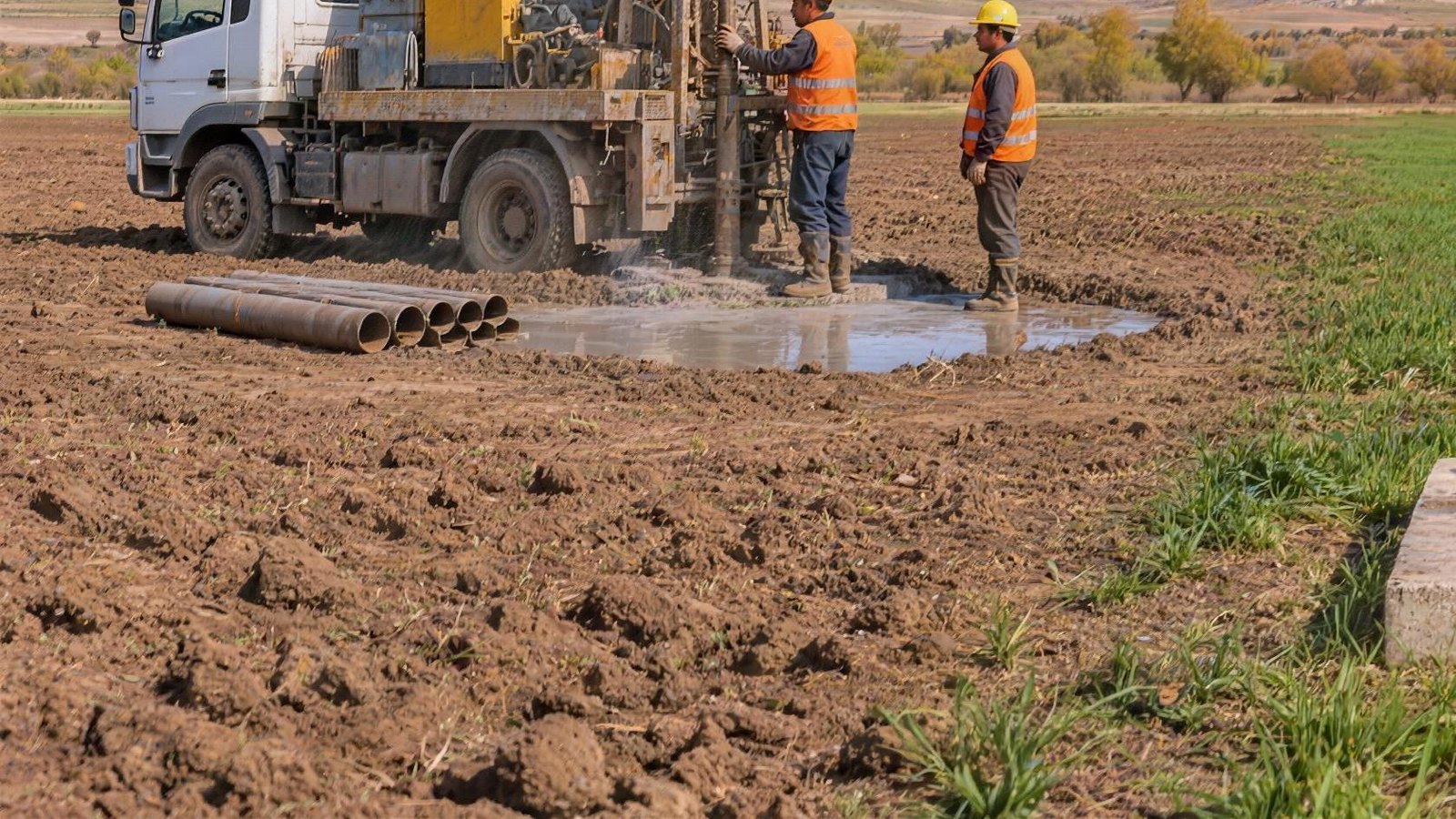
Drilling: Once you hold both documents, the well is sunk by a driller holding a certificate of competence from DSİ (Bylaw Article 9). The exploration certificate is valid for one year; if you apply in its final month, it is extended by one year (Law No. 167 Article 9).
Usage certificate (well licence): You apply to DSİ within one month of finding water. The certificate is not issued until a measuring system, i.e. a meter, has been fitted to the well (Law No. 167 Article 10).
Electricity: Without a usage certificate, the distribution company cannot supply electricity to the well. An agricultural irrigation subscription also requires an opinion from the Provincial or District Directorate of Agriculture and Forestry (see below).
Everything starts with DSİ
The order matters. The building permit file for agricultural land contains DSİ’s institutional opinion (Regulation Annex 1 a); this opinion is not the same document as the exploration certificate DSİ will issue to you, but both depend on DSİ taking a favourable view of the well. If DSİ’s view is negative, the file at the Provincial Directorate will not proceed either. That is why the DSİ door has to open first.
Can a well be sunk anywhere?
No. On DSİ’s proposal, certain areas are declared ‘Groundwater Operation Areas’ in the Official Gazette (Resmî Gazete); in declared operation areas, DSİ determines the number, location and depth of wells and the amount of water to be abstracted (Law No. 167 Articles 3 and 4). Demand in a region cannot exceed the safe yield of the groundwater (i.e. the amount that can be abstracted each year without depleting the reserve) (Bylaw Article 15). In some regions where all the abstractable water has already been allocated, DSİ does not issue certificates for new wells. You can find out the status of your land from the DSİ regional directorate.
Does a well on a neighbouring parcel affect a new well?
Yes. Under the DSİ Groundwater Technical Regulation, a well site may not be chosen within the zone of influence of an existing well (Section III, 1.1.5). The regulation sets no fixed distance in metres for the zone of influence of a neighbouring well; it is determined by a hydrogeological survey. If there is a well on the next parcel, the site of the new well is chosen accordingly.
How far must a well be from a septic tank, barn or electricity cable?
There is no fixed distance. Article 1.1.6 of the Technical Regulation was amended in 2011: the distance of a well from underground electricity and gas lines, overhead high-voltage lines, flood beds, houses, barns, septic tanks, cemeteries and similar places is determined after DSİ accepts the report prepared by the technical supervisor (Official Gazette 7/6/2011, No. 27957, Article 8). Fixed distances circulating online, such as ‘60 metres from a septic tank, 30 metres from a house’, come from the text as it stood before this amendment.

What documents are needed for the Provincial Directorate permit?
Annex 1 (a) of the Agricultural Land Regulation lists the following documents required for an agricultural building permit:
Application petition
A kml/kmz file showing the parcels concerned and the layout of the facility (a location file that opens in maps such as Google Earth)
Notarised letter of undertaking (Annex 7)
DSİ’s institutional opinion and the opinions of other institutions
Project Technical Report (Proje Teknik Raporu) prepared by an agricultural engineer holding an SMM certificate (independent consulting engineer licence)
Approved land survey report
Opinion of the Soil Conservation Board (Toprak Koruma Kurulu) if the land is in a great plain protection area (büyük ova koruma alanı)
Site plan and photographs of the land
If the land is held on a shared title deed (hisseli tapu, i.e. in undivided shares by several owners), notarised letters of consent from the other co-owners (consent document; Annex 17)
If the land is leased (Annex 1 g): for Treasury land, a ‘no objection’ letter from the national property directorate; for private land, a lease or right of superficies of at least 10 years recorded in the declarations section of the title deed. It is also required that the applicant (or their family) owns no parcel outside a great plain protection area within the same district, and that the lease contract includes a statement that there is no objection to building an agricultural structure on the leased land.
For the DSİ application, a well project with sketch map, a certified copy of the title deed and a statement of need are required; for sites DSİ has not surveyed, a hydrogeology report is also required (DSİ Groundwater Technical Regulation, 2011 amendment).
Can a water well be sunk in a great plain?
It can, but the route is different. Outside a great plain protection area, an irrigation well file does not go to the Soil Conservation Board; the Governor’s Office decides on it (Regulation Article 12/1-ğ). If the land is in a great plain protection area, the file goes to the Soil Conservation Board: the permit is granted by the Ministry of Agriculture and Forestry, provided that no other suitable (alternative) site exists and the Board approves (Regulation Article 15/1-a).
How do you get a water well licence (usage certificate)?
When water is found in a well sunk on the basis of an exploration certificate, you apply to DSİ for a usage certificate within one month. This is the document popularly known as the ‘well licence’. The application must be accompanied by the well log, pumping programme, water analysis report and a certified copy of the title deed.
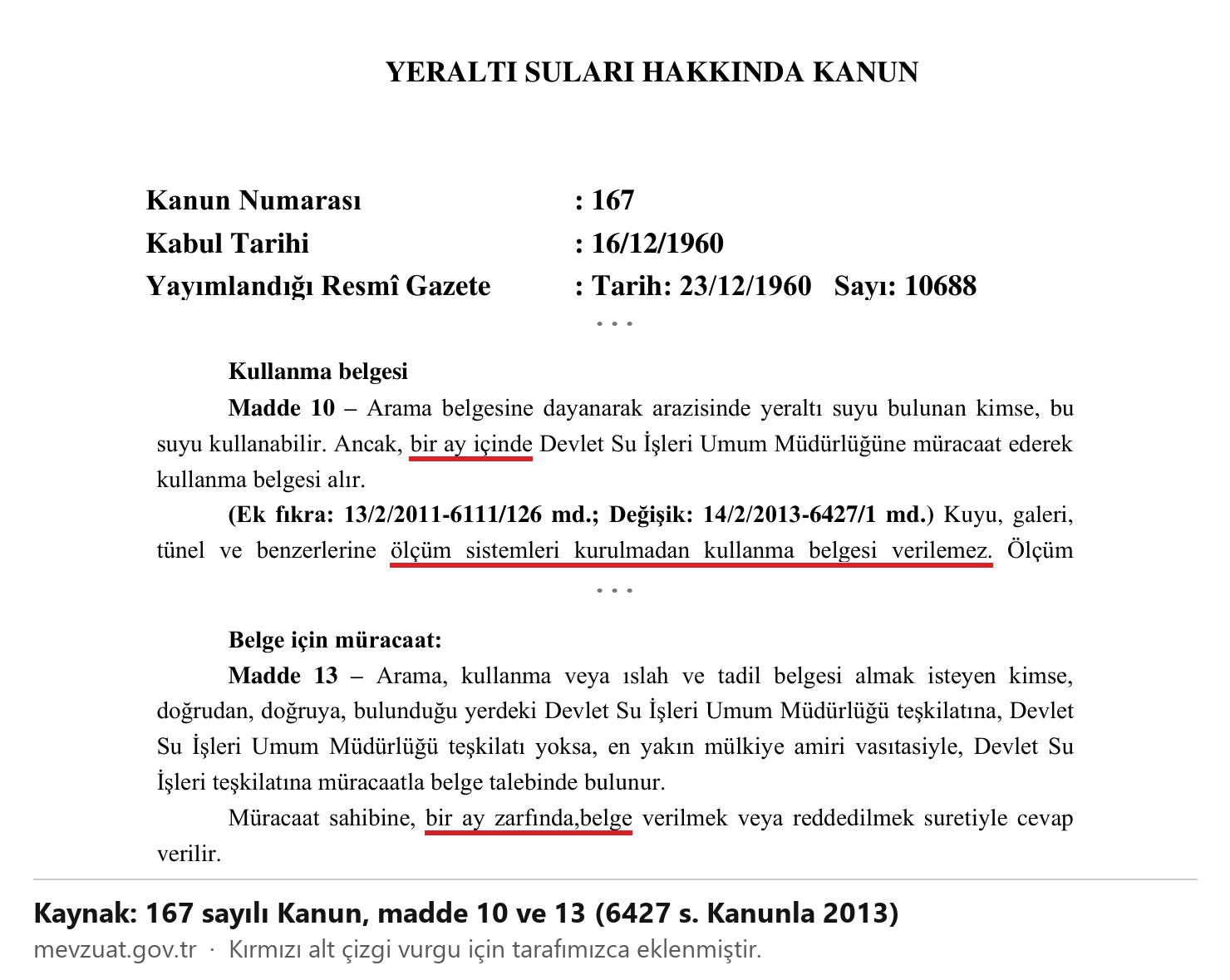
No usage certificate may be issued until measuring systems have been installed on wells, galleries, tunnels and the like. (Law No. 167, Article 10)
Meter required: No usage certificate is issued until a measuring system has been installed on the well. The certificate states the maximum amount of water you may abstract from the well per year (and the corresponding amount of electricity); once this limit is reached, no more water may be abstracted that year (DSİ Groundwater Measuring Systems Regulation Article 9/c). DSİ may later reduce or increase the amount to be abstracted (Bylaw Article 12).
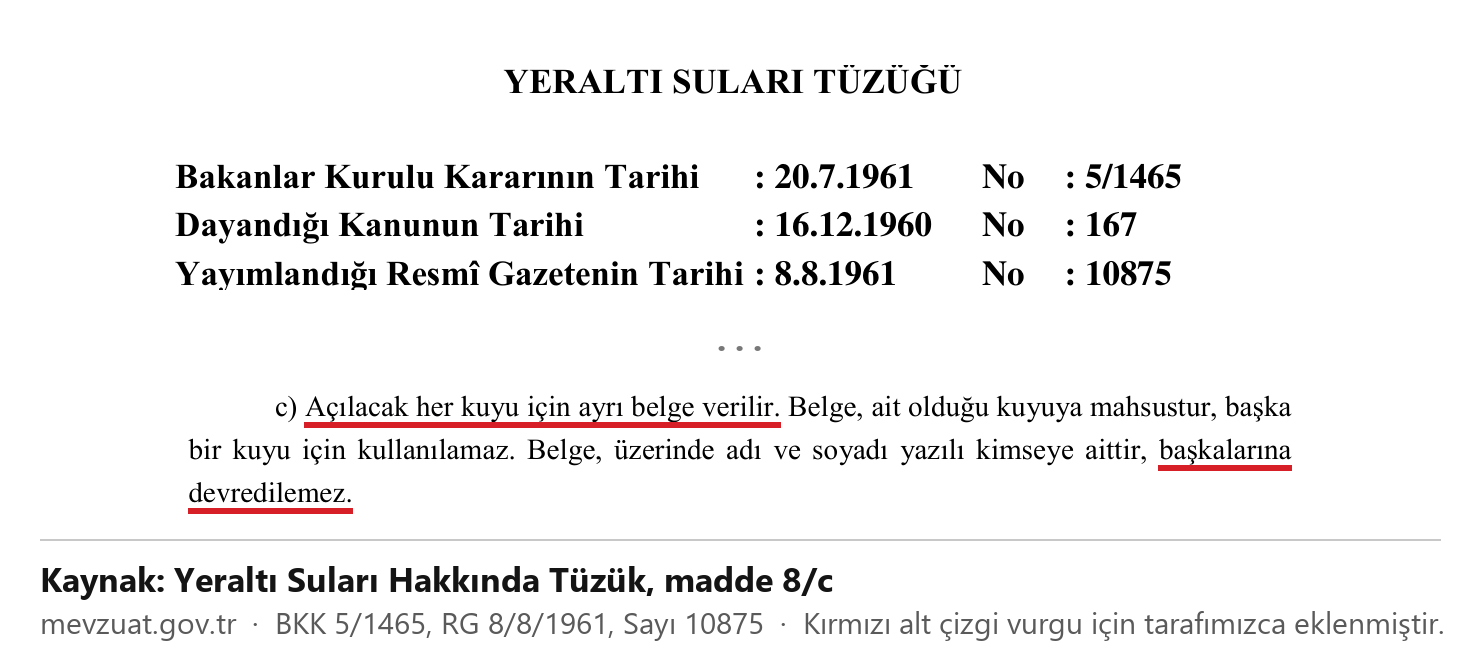
Personal certificate: A separate certificate is issued for each well; it belongs to the person named on it and cannot be transferred to others (Bylaw Article 8/c).
No fees: Exploration, usage and rehabilitation certificates are not subject to charges, stamp duty or fees (Law No. 167 Article 12). Reports, projects and drilling, however, are paid services.
Is a separate permit needed for a pump house?
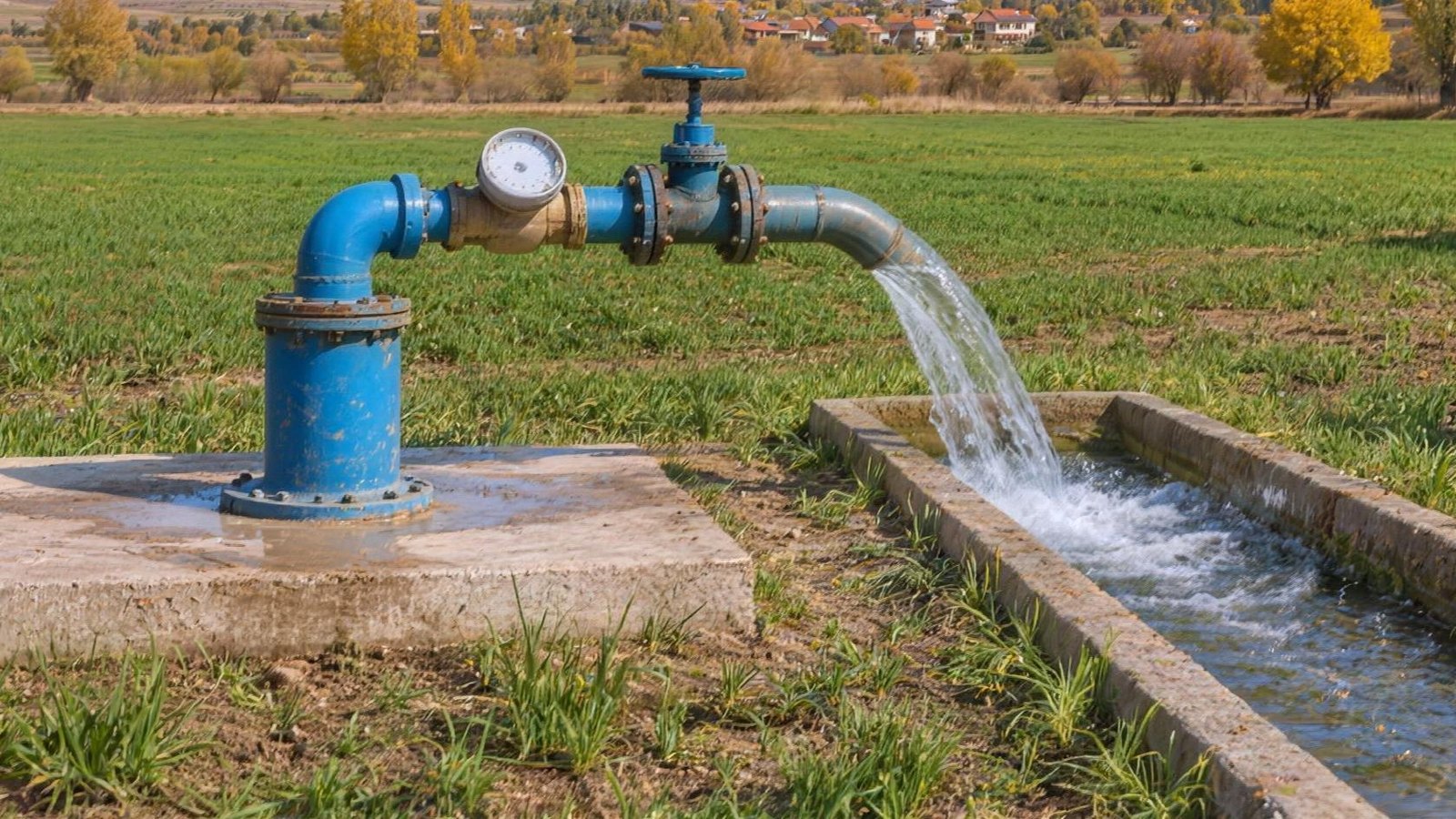
Yes, outside village settlement areas and their surroundings. A pump house and a water tank are structures. Outside the village settlement area (köy yerleşik alanı: the area, with boundaries set by the authorities, where the village’s houses are clustered), its surroundings and hamlets, a building permit is required (Zoning Law No. 3194 Articles 21 and 27; Unplanned Areas Zoning Regulation Articles 57 and 58). In metropolitan provinces, the equivalent of the village settlement area is the ‘rural settlement area’ (Unplanned Areas Zoning Regulation Article 4, 2021 amendment). The permit requires setback distances from the road and the parcel boundary and a favourable opinion from the provincial directorate; ask the authority that will issue the permit for details.
If solar panels (GES) are to be installed for the irrigation pump: a system with a metal structure without a reinforced concrete foundation, a total panel area of no more than 125 m² and a highest point of no more than 150 cm is exempt from a permit; however, its surveys and projects must be reviewed by the authority competent to issue permits (Unplanned Areas Zoning Regulation Article 10, 2022 amendment). On the Law No. 5403 side, the pumping must be permitted by DSİ; irrigation solar installations are permitted for producers using individual or modern pressurised irrigation systems, and there are limits on the panel area (Agricultural Land Regulation Annex 1 item 10.7).
How is a water well connected to electricity?
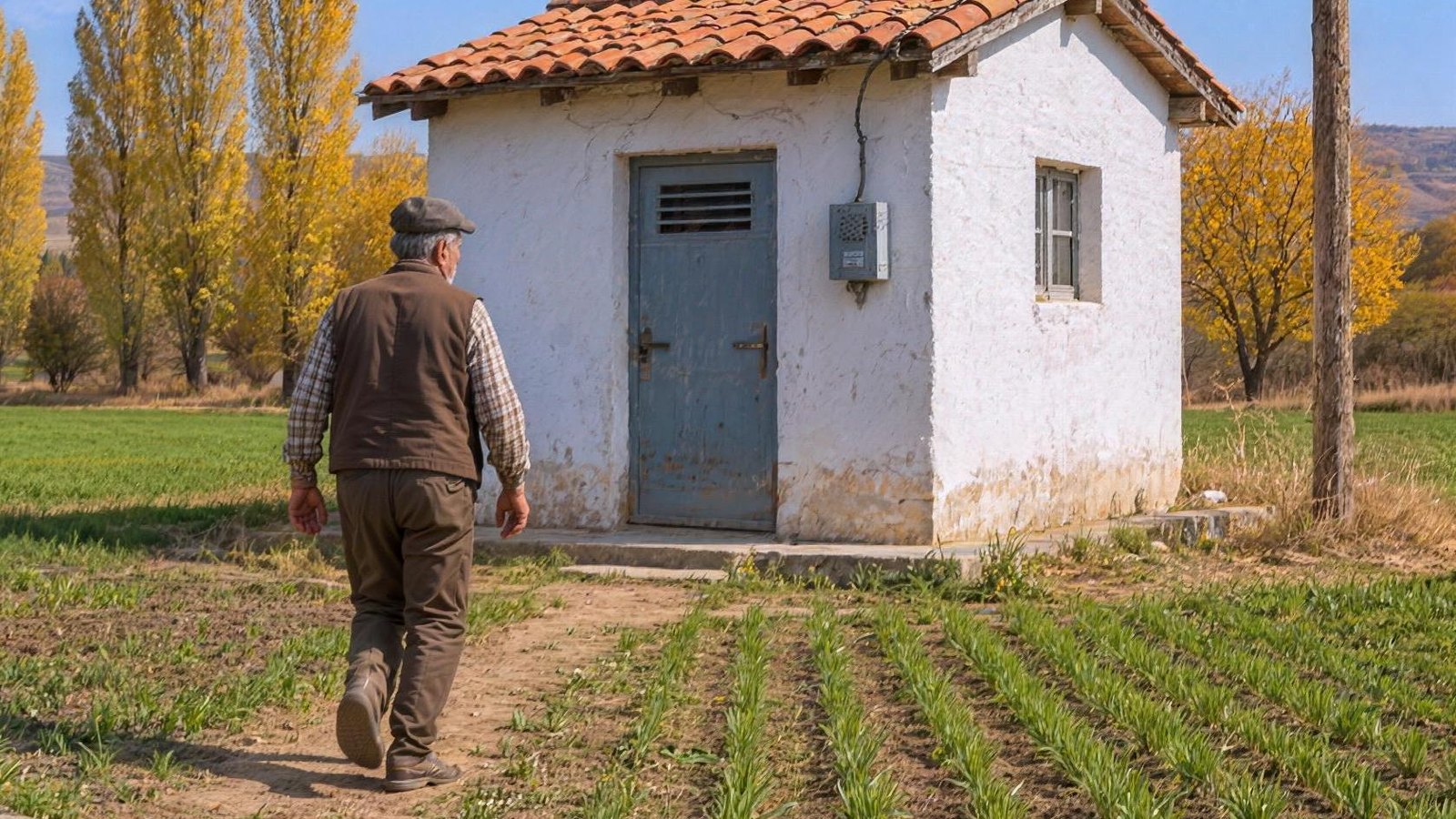
Usage certificate: First, obtain a usage certificate (well licence) from DSİ. Under the DSİ Groundwater Measuring Systems Regulation, the authorised distribution company may not supply electricity to groundwater wells without a usage certificate (Article 9/b).
Directorate of Agriculture opinion: For an agricultural irrigation subscription, an opinion is obtained from the Provincial or District Directorate of Agriculture and Forestry. The procedure for this opinion is set out in the Ministry’s Directive on Issuing Opinions and Documents as a Basis for Agricultural Irrigation Electricity Subscriptions, which entered into force on 29 September 2025. Ask the directorate which documents are required before you apply.
Distribution company: With these documents, a connection application is made to the distribution company.
If more water is abstracted than the amount stated on the certificate, DSİ notifies the distribution company and the electricity is cut off within 7 days at most (Energy Market Regulatory Authority (EPDK) Electricity Market Consumer Services Regulation Article 48/4). In addition, structures and facilities without a Law No. 5403 permit cannot obtain electricity, water or natural gas subscriptions (Law No. 5403 Article 21).
What is the penalty for an unpermitted well?
An unpermitted well incurs separate penalties on both the DSİ side and the Provincial Directorate side (in both cases, including under Law No. 167, the fine is imposed by the local administrative chief, i.e. the provincial governor or district governor; DSİ and the Provincial Directorate establish the violation). Under Law No. 167, anyone who sinks a well without a certificate is given an administrative fine; if DSİ sees no objection, a certificate is issued to the owner; if it does see an objection, the well is sealed and the cost is recovered from the person who had it sunk (Article 18). Under Law No. 5403, a structure started without a permit is also halted and an administrative fine is imposed as well; if a permit application is made within one month of notification of the fine and the permit is granted, the work can be completed (Article 21).
What else should you watch out for?
Near a drinking water well: No activity whatsoever is permitted within the absolute protection zone of a drinking water well, which has a radius of at least 50 metres; DSİ may extend this zone up to 100 metres (Regulation on the Protection of Groundwater against Pollution and Deterioration Article 13).
Protected sites: Drilling in a protected site (sit alanı) requires permission: in a cultural heritage site, a decision of the regional board for the conservation of cultural property is required; in a natural site, a decision of the regional commission for the conservation of natural assets (Law No. 2863 Article 9 and Additional Article 4).
Very large abstraction: Groundwater abstraction of 300,000 m³ or more per year is on the Annex 2 list of the Environmental Impact Assessment (ÇED) Regulation (item 43). Whether a single farmer’s well exceeds this threshold depends on the annual abstraction amount (m³/year) stated on the certificate.
Hand-dug wells: Law No. 167 exempts wells dug by hand from the DSİ certificate (Article 8/a). Under the Bylaw, these are wells dug with hand tools in surface alluvium, and wells sunk by driving a pipe of no more than 100 millimetres in diameter to a depth of no more than 10 metres into the first water layer (Bylaw Article 3). This exemption applies only to the DSİ certificate; for the purposes of Law No. 5403, a well and pumping facility on agricultural land is still an agricultural building.
Common mistakes
Having the drilling done first and trying to obtain the certificate afterwards. Drilling does not start until both documents have been obtained.
Assuming the DSİ certificate alone is enough. On agricultural land, a Law No. 5403 permit is also required.
Choosing a site without taking into account a well, septic tank or barn on the neighbouring parcel.
Expecting a usage certificate without fitting a meter; applying for electricity without the certificate.
Assuming the well’s certificate passes to you when you buy the land. The certificate is personal; the new owner should apply to DSİ and ask about the status.
Building a pump house without a permit (outside village settlement areas and their surroundings).
Frequently asked questions
Where do you get a drilling permit?
The document popularly called a ‘drilling permit’ is the groundwater exploration certificate issued by DSİ. You can make a pre-application via e-Government or apply to a DSİ regional or branch directorate. On agricultural land, a Law No. 5403 permit is also required.
Where do you get a water well permit?
For the groundwater, from DSİ (an exploration certificate, then a usage certificate); for the structure on agricultural land, from the Governor’s Office via the Provincial Directorate of Agriculture and Forestry. The Law No. 5403 application is made to the municipality or (in non-metropolitan provinces) to the special provincial administration, and the file goes to the Provincial Directorate via the TAD Portal.
How long does it take to get a well licence?
By law, DSİ issues or refuses a certificate within one month of the application (Law No. 167 Article 13); this period covers only DSİ’s response, not the whole process. The exploration certificate, the Law No. 5403 permit and the drilling all come before the licence; the total time depends on the file at the Provincial Directorate and the land survey. After water is found, you must apply for the usage certificate within one month.
How much does a water well licence cost?
DSİ certificates are exempt from fees and charges (Law No. 167 Article 12). The fees you pay are for services such as the hydrogeology report, the well project, the Project Technical Report and the drilling; these are charged at free-market prices.
Is there a penalty for an unpermitted well?
Yes. There are separate administrative fines on both the DSİ side (Law No. 167; the fine is imposed by the local administrative chief) and the Provincial Directorate side (Law No. 5403; the fine is again imposed by the local administrative chief); if DSİ sees an objection, the well is sealed.
Can a well sunk without a permit be licensed retrospectively?
Under Law No. 167, a fine is imposed for a well without a certificate; if DSİ sees no objection to the well, a certificate is issued to the owner; if it does, the well is sealed (Article 18). On the Law No. 5403 side, a separate permit application is also needed.
What documents are needed to connect a well to electricity?
First, a DSİ usage certificate (well licence) is needed; without it, no electricity is supplied. For an agricultural irrigation subscription, an opinion is obtained from the Provincial or District Directorate of Agriculture and Forestry (under the Ministry’s 2025 directive); ask the directorate which documents are required. If the amount stated on the certificate is exceeded, the electricity is cut off within 7 days at most.
How far must a well be from a neighbouring well?
The regulation sets no fixed distance in metres for a neighbouring well. The new well is sited outside the zone of influence of the existing well; this zone is determined by a hydrogeological survey. Since 2011 there has also been no fixed distance for septic tanks, cemeteries, barns, power lines and flood beds; the distance is determined by the technical supervisor’s report and accepted by DSİ.
Can a well be sunk on a field held on a shared title deed?
For the Law No. 5403 permit, notarised letters of consent from the other co-owners (Annex 17) are required. Some DSİ regional directorates ask for letters of consent where the land is on a shared title deed; ask the DSİ regional directorate responsible for your area before applying.
Can a tenant sink a well on a field?
For the Law No. 5403 permit, the requirements are: for Treasury land, a ‘no objection’ letter from the national property directorate; for private land, a lease (or right of superficies) of at least 10 years recorded in the declarations section of the title deed, a statement in the contract that there is no objection to an agricultural structure, and that neither you nor your family own a parcel outside a great plain within the same district (Regulation Annex 1 g).
Can a well be sunk in a great plain?
It can; but the permit is granted by the Ministry of Agriculture and Forestry, provided that no other suitable site exists and the Soil Conservation Board approves.
Can a well licence be transferred to someone else?
No. The certificate belongs to the person named on it and cannot be transferred to others (Bylaw Article 8/c).
How long is an exploration certificate valid?
One year. If you apply in the final month of that period, it is extended by a further year; if the work is still not completed within the extended period, the certificate becomes void (Law No. 167 Article 9).
Sources
Groundwater Law No. 167, current text (Articles 1, 3, 4, 8, 9, 10, 12, 13, 18). Official Gazette 23/12/1960, No. 10688.
Groundwater Bylaw (Council of Ministers Decree 5/1465), Official Gazette 8/8/1961, No. 10875 (Articles 3, 6, 7, 8, 9, 12, 15).
Soil Conservation and Land Use Law No. 5403, current text (Articles 3, 13 and 21).
Regulation on the Protection and Use of Agricultural Land, Official Gazette 4/4/2026, No. 33214 (Articles 5, 6, 12, 14, 15) and its annexes (Annex 1 a, e, g; 2.2; 10.7).
DSİ Groundwater Technical Regulation, Official Gazette 23/6/1972, No. 14224 (Section III, 1.1.5 and 1.1.6); amendment Official Gazette 7/6/2011, No. 27957.
DSİ Groundwater Measuring Systems Regulation, Official Gazette 12/10/2013, No. 28793 (Article 9).
EPDK Electricity Market Consumer Services Regulation, Official Gazette 30/5/2018, No. 30436 (Article 48).
Directive on Issuing Opinions and Documents as a Basis for Agricultural Irrigation Electricity Subscriptions (Ministry of Agriculture and Forestry, 2025-10, in force 29/9/2025).
Unplanned Areas Zoning Regulation (Articles 4, 10, 57, 58; 2021 and 2022 amendments) and Zoning Law No. 3194 (Articles 21, 27).
Regulation on the Protection of Groundwater against Pollution and Deterioration (Article 13; 2015 amendment); EIA (ÇED) Regulation Annex 2 (item 43); Law No. 2863 (Article 9, Additional Article 4); Law No. 6360.
This article is for general information only. For the specific situation of your land, consult the DSİ regional directorate, the Provincial Directorate of Agriculture and Forestry or an agricultural engineer.